Bhutan’s Jomolhari Trek: A Cultural Odyssey Through the Himalayas
Embarking on the Jomolhari Trek in Bhutan was a journey of cultural immersion and breathtaking landscapes. Join me as I recount the awe-inspiring trek from Paro to Thimphu, where tradition and human connection left a lasting impression.




Arrival in Paro: A Cultural Prelude
As I stepped off the plane at Paro International Airport, I was immediately enveloped by the crisp mountain air and the serene beauty of Bhutan. The journey began with a visit to the Kyichu Lhakhang, a 7th-century temple that stands as a testament to Bhutan’s rich spiritual heritage. The temple’s ancient walls seemed to whisper stories of the past, and I found myself lost in contemplation, a practice I often engage in to connect with the cultural essence of a place.
The National Museum, housed in a 17th-century watchtower, offered a fascinating glimpse into Bhutan’s history and traditions. The intricate artifacts and exhibits were a reminder of the country’s dedication to preserving its cultural identity. As I wandered through the museum, I couldn’t help but draw parallels to the cultural preservation efforts I’ve witnessed in Japan, my mother’s homeland.
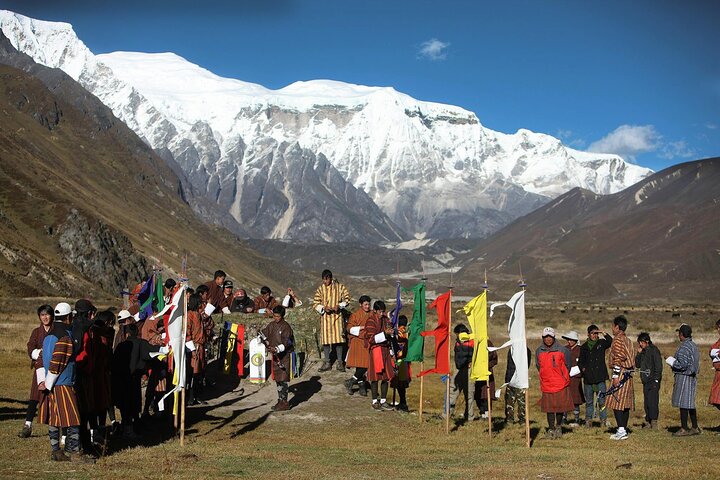
The day concluded with a visit to the Paro Rinpung Dzong, an impressive fortress that serves as both a religious and administrative center. The dzong’s architecture was a marvel, and I was fortunate to witness a game of archery, Bhutan’s national sport. The archers’ skill and the accompanying songs and dances were a celebration of tradition, a theme that would resonate throughout my journey.
Trekking the Jomolhari Trail: A Journey Through Nature and Culture
The trek from Paro to Thimphu via Lingzhi was a nine-day odyssey through some of the most breathtaking landscapes I’ve ever encountered. The trail led us through pristine forests, past mirror-like lakes, and up to the Jomolhari Basecamp, where the majestic Mount Jomolhari loomed in the distance.
Each day brought new challenges and rewards, from the physical exertion of hiking at high altitudes to the simple joy of sharing stories with my fellow trekkers and guides. The guides, in particular, were a source of inspiration and support. Their knowledge of the land and its traditions enriched the experience, and their warmth made me feel like part of their family.
One of the most memorable moments was our visit to the alpine village of Laya, where we interacted with the highlanders and learned about their unique way of life. The villagers’ hospitality and resilience were a testament to the strength of community and tradition, values that resonate deeply with me as someone who has always sought to understand and appreciate diverse cultures.
A Thoughtful Conclusion: The Human Touch
As the trek came to an end, I found myself reflecting on the journey and the people who had made it so special. The guides’ thoughtful gestures, such as organizing a surprise pizza and beer picnic by a river, were a testament to their kindness and attention to detail. It was a simple yet profound reminder of the importance of human connection and the joy of shared experiences.
In Thimphu, the capital city, I had the opportunity to explore the bustling streets and visit cultural landmarks such as the National Institute for Zorig Chusum, where traditional Bhutanese arts and crafts are taught. The city’s vibrant energy was a fitting contrast to the tranquility of the mountains, and it offered a glimpse into Bhutan’s modern identity.
As I prepared to leave Bhutan, I felt a deep sense of gratitude for the journey and the people who had made it unforgettable. The Jomolhari Trek was more than just a hike through the Himalayas; it was a cultural immersion that left a lasting impression on my heart and mind. I left Bhutan with a renewed appreciation for the beauty of tradition and the power of human connection, lessons that I carry with me as I continue to explore the rich tapestry of Asian cultures.


