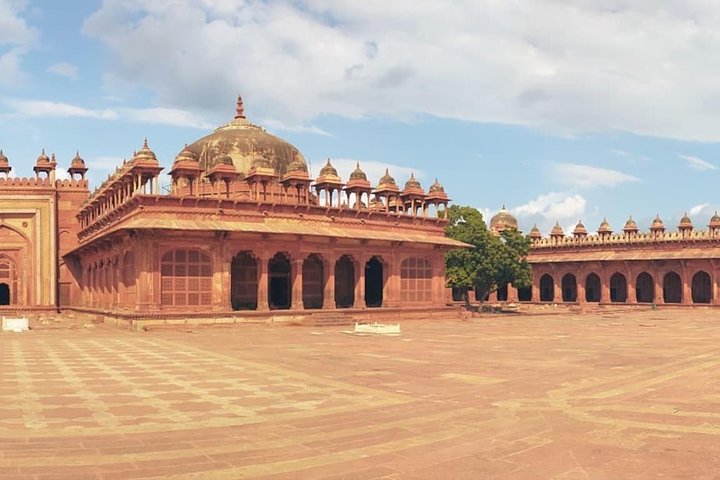
Immerse yourself in the rich history and architectural wonders of Agra on a full-day city tour. Visit the iconic Taj Mahal, Agra Fort, and Fatehpur Sikri, all UNESCO World Heritage Sites.
Immerse yourself in the rich history and architectural wonders of Agra on a full-day city tour. Visit the iconic Taj Mahal, Agra Fort, and Fatehpur Sikri, all UNESCO World Heritage Sites.
- New Delhi - Day 1: Arrive in Delhi. If time permits, explore a few attractions and enjoy an overnight stay at the hotel.
- New Delhi - Qutub Minar is a historic monument in Delhi, India. Constructed in the early 13th century by Qutb-ud-din Aibak and completed by his successors, it is made of red sandstone and marble, standing approximately 73…
- New Delhi - Day 1: Arrive in Delhi. If time permits, explore a few attractions and enjoy an overnight stay at the hotel.
- New Delhi - Qutub Minar is a historic monument in Delhi, India. Constructed in the early 13th century by Qutb-ud-din Aibak and completed by his successors, it is made of red sandstone and marble, standing approximately 73 meters tall. As a UNESCO World Heritage Site, it is a renowned tourist attraction, showcasing the rich architectural heritage of medieval India.
- Humayun’s Tomb - This famous historical monument in Delhi, India, was built in 1570 by Empress Bega Begum, Humayun’s wife. An excellent example of Mughal architecture, it is constructed from red sandstone and white marble, surrounded by beautiful gardens and pathways. Humayun’s Tomb, a UNESCO World Heritage Site, inspired the design of the Taj Mahal.
- Swaminarayan Akshardham - Akshardham Temple is a stunning modern Hindu temple in Delhi, India, opened to the public in 2005 by the BAPS Swaminarayan Sanstha. Dedicated to Bhagwan Swaminarayan, it showcases Indian culture, art, and spirituality, made of pink sandstone and white marble with intricate carvings and sculptures. Akshardham features exhibitions, a musical fountain, and a large garden.
- Friday Mosque (Jama Masjid) - Jama Masjid, one of India’s largest and most famous mosques, is located in Old Delhi. Built by Mughal Emperor Shah Jahan in 1656, it is made of red sandstone and white marble, with three domes and two tall minarets. Thousands gather here for prayers, especially during Eid. Jama Masjid symbolizes Mughal architecture and Islamic heritage.
- India Gate - India Gate is a war memorial in New Delhi, India, built in 1931 to honor Indian soldiers who died in World War I. The monument, 42 meters tall and made of sandstone, features an eternal flame called Amar Jawan Jyoti to remember unknown soldiers. India Gate is a popular tourist spot and a symbol of national pride.
- Parliament House - Located in New Delhi, Parliament House is where the Indian Parliament convenes to make laws. Designed by British architects Edwin Lutyens and Herbert Baker, the building was completed in 1927 and features a circular shape with large columns. It houses the Lok Sabha, Rajya Sabha, and Central Hall, symbolizing India’s democracy and governance.
- Agrasen Ki Baoli - Leamigo - Agrasen ki Baoli is a historical stepwell in the heart of Delhi, near Connaught Place. Believed to have been originally built by King Agrasen during the Mahabharata era and later rebuilt in the 14th century, the stepwell is made of stone with 108 steps leading to the water. It was used to store water and provided a cool resting place during summers. Today, Agrasen ki Baoli is a protected monument and a popular tourist attraction.
- Lotus Temple - The Lotus Temple is a beautiful and unique temple in New Delhi, India, shaped like a lotus flower and made of white marble. Completed in 1986, it belongs to the Bahá’í Faith, welcoming people of all religions to visit and pray silently inside. The Lotus Temple symbolizes peace, unity, and harmony, attracting many tourists.
- Red Fort - The Red Fort is a historic fort in Old Delhi, India, built by Mughal Emperor Shah Jahan in 1648. Made of red sandstone, which gives it its name, the fort hosts the Prime Minister’s annual Independence Day flag hoisting. As a UNESCO World Heritage Site, the Red Fort symbolizes India’s rich history. (DRIVE PASS)
- Raj Ghat - Raj Ghat is a memorial dedicated to Mahatma Gandhi, the Father of the Nation, located on the banks of the Yamuna River in Delhi. The memorial marks where Gandhi was cremated on January 31, 1948, with a black marble platform and eternal flame honoring his memory. Visitors from around the world come to Raj Ghat to pay respects and remember his message of peace and non-violence.
- Mandawa - Day 3: Drive to Mandawa.
- Mandawa - Mandawa Havelis are beautiful old mansions in Mandawa, Rajasthan, India, built by wealthy merchants during the 18th and 19th centuries. Famous for their intricate frescoes and detailed artwork on walls and ceilings, the paintings depict scenes from Indian mythology, daily life, and royal history. Mandawa Havelis attract tourists eager to experience Rajasthan’s rich culture and heritage.
- Mandawa - The fresco paintings of Mandawa are renowned for their beautiful and detailed artwork on the walls and ceilings of the old havelis in Mandawa, Rajasthan. Depicting stories from Indian mythology, royal life, and everyday scenes, the frescoes use bright, vibrant colors made from natural minerals. Mandawa’s fresco paintings showcase Rajasthan’s rich artistic heritage, attracting art lovers and tourists.
- Bikaner - Day 4: Drive to Bikaner.
- Junagarh Fort - Junagarh Fort is a historic fort in Bikaner, Rajasthan, India, built in the late 16th century by Raja Rai Singh. Unlike many forts, Junagarh Fort is built on the ground, not on a hill. Known for its beautiful palaces, intricate carvings, and stunning architecture, Junagarh Fort houses museums displaying royal artifacts and history.
- Bikaner - The Camel Breeding Farm in Bikaner is one of Asia’s largest camel research centers, established in 1984 by the Rajasthan government. The farm focuses on breeding, research, and care of different camel breeds. Visitors can see camels of various sizes, learn about their life cycle, and enjoy camel rides. It is a popular tourist spot offering a unique glimpse into desert life and camel culture.
- Jaisalmer - Day 5: Drive to Jaisalmer (Evening at Gadisar Lake).
- Jaisalmer Fort - Jaisalmer Fort, a magnificent fort in Jaisalmer, Rajasthan, India, is also known as the “Golden Fort” due to its yellow sandstone walls that shine in the sunlight. Built in 1156 AD by Raja Rawal Jaisal, it is one of the largest fully preserved fortified cities in the world, housing temples, palaces, markets, and homes where people still live today. Jaisalmer Fort is a UNESCO World Heritage Site and a popular tourist destination.
- Jaisalmer - The Havelis of Jaisalmer are beautiful old mansions built by wealthy merchants, famous for their intricate stone carvings and detailed architecture. These havelis showcase traditional Rajasthani art and culture with elaborate balconies and jharokhas (windows). Notable havelis include Patwon Ki Haveli, Salim Singh Ki Haveli, and Nathmal Ki Haveli. Jaisalmer’s havelis attract tourists eager to experience the rich heritage of the desert city.
- Jaisalmer - The Sam Sand Dunes, located near Jaisalmer in the Thar Desert of Rajasthan, are famous for their beautiful golden sand hills that change color with the sun. Visitors enjoy camel safaris, desert camping, and traditional folk music and dance. The dunes offer a unique experience of the vast desert landscape and stunning sunsets, making them a popular spot for tourists exploring Rajasthan’s desert culture.
- Jodhpur - Day 7: Drive to Jodhpur.
- Mehrangarh Museum - Jodhpur - Mehrangarh Fort, a massive and majestic fort in Jodhpur, Rajasthan, was built in the 15th century by Rao Jodha, the founder of Jodhpur city. Standing on a high hill, it offers stunning views of the Blue City below. Known for its beautiful palaces, intricate carvings, and well-preserved museums, Mehrangarh Fort is one of India’s largest forts and a popular tourist attraction.
- Jaswant Thada - Jaswant Thada is a beautiful marble cenotaph in Jodhpur, Rajasthan, built in memory of Maharaja Jaswant Singh II in 1899. Made of intricately carved white marble, it is often called the “Taj Mahal of Marwar.” Surrounded by peaceful gardens and small lakes, Jaswant Thada is a popular spot for tourists admiring its architecture and serene environment.
- Udaipur - Day 8: Drive to Udaipur (via Ranakpur Jain Temple).
- City Palace of Udaipur - Udaipur City Palace, a magnificent palace complex in Udaipur, Rajasthan, was built over several centuries, starting in 1559 by Maharana Udai Singh II. Famous for its beautiful architecture, intricate balconies, and stunning views of Lake Pichola, it houses museums, royal apartments, and gardens showcasing Mewar’s rich history. Udaipur City Palace is one of Rajasthan’s largest palace complexes and a popular tourist attraction.
- Lake Pichola - Lake Pichola, a beautiful artificial lake in Udaipur, Rajasthan, was created in the 14th century and is surrounded by palaces, temples, and hills. Known for its scenic views and boat rides, especially near the Lake Palace and Jag Mandir, Lake Pichola adds to Udaipur’s charm, often called the “City of Lakes.” It is a popular spot for tourists to relax and enjoy the peaceful environment.
- Jagdish Temple - Jagdish Temple, a famous Hindu temple in Udaipur, Rajasthan, was built in 1651 by Maharana Jagat Singh. Dedicated to Lord Vishnu, it is known for its beautiful architecture and intricate carvings, featuring a large hall with many pillars and a tall spire visible from a distance. Jagdish Temple is a popular place of worship and a must-visit attraction in Udaipur.
- Pushkar - Day 10: Drive to Pushkar.
- Brahma Temple - The Brahma Temple, one of the few temples dedicated to Lord Brahma in India, is located in the holy town of Pushkar, Rajasthan. Famous for its beautiful architecture and the nearby sacred Pushkar Lake, pilgrims from all over come to offer prayers and take a holy dip in the lake. The Brahma Temple is an important spiritual site and a popular tourist attraction in Pushkar.
- Pushkar Lake - Pushkar Lake, a sacred lake in Pushkar, Rajasthan, is surrounded by many ancient temples and ghats (steps leading to the water). Considered holy by Hindus, pilgrims take ritual baths here to cleanse their sins. Pushkar Lake is also famous for the annual Pushkar Fair, a colorful and vibrant cultural event. It is a peaceful and spiritual place attracting visitors from around the world.
- Jaipur - Day 11: Drive to Jaipur.
- City Palace of Jaipur - City Palace, a grand palace in the heart of Jaipur, Rajasthan, was built in the early 18th century by Maharaja Sawai Jai Singh II, the founder of Jaipur city. Showcasing a blend of Rajput and Mughal architecture with beautiful courtyards, gardens, and museums, it houses the royal family’s residence and several galleries displaying royal costumes, weapons, and art. City Palace is a popular tourist attraction and an important symbol of Jaipur’s rich heritage.
- Hawa Mahal - Palace of Wind - Hawa Mahal, a famous palace in Jaipur, Rajasthan, was built in 1799 by Maharaja Sawai Pratap Singh. Known as the “Palace of Winds” for its unique honeycomb-shaped facade with many small windows, it allowed royal ladies to observe street life without being seen. Hawa Mahal is a popular tourist spot and an important example of Rajput architecture.
- Jantar Mantar - Jaipur - Jantar Mantar in Jaipur is a renowned astronomical observatory built by Maharaja Sawai Jai Singh II in the early 18th century. It consists of several large instruments designed to measure time, predict eclipses, and track stars and planets. As a UNESCO World Heritage Site, it is one of the largest stone sundials in the world, reflecting the scientific knowledge and architectural skills of ancient India. Jantar Mantar is a popular place for tourists and students interested in astronomy.
- Jal Mahal - Jal Mahal, a beautiful palace in the middle of Man Sagar Lake in Jaipur, Rajasthan, is also known as the “Water Palace” because it is surrounded by water on all sides. Showcasing a blend of Rajput and Mughal architecture with elegant balconies and terraces, Jal Mahal appears to float on the lake, especially during the monsoon season when the water level rises. It is a popular tourist attraction known for its scenic beauty and peaceful surroundings.
- New Delhi - Day 12: After exploring the beautiful places and rich heritage of Rajasthan, it’s time to return to Delhi. This journey has been filled with amazing experiences, stunning architecture, and vibrant culture. Returning to Delhi brings back memories of the colorful cities and historic monuments visited. The tour concludes here, but the memories will last forever. Looking forward to more adventures in the future! (or Optional Extension to Agra visit - Taj Mahal)

- Private transportation
- Complimentary bottled water
- Included monument fees & toll taxes
- Lunch provided
- Private transportation
- Complimentary bottled water
- Included monument fees & toll taxes
- Lunch provided
- On-board restrooms
- Gratitudes
- On-board restrooms
- Gratitudes
The 12-day Rajasthan adventure kicks off in Delhi, where travelers will visit renowned sites like India Gate, Qutub Minar, Humayun’s Tomb, and the Lotus Temple. The following day, the journey proceeds to Mandawa, a delightful town in the Shekhawati region celebrated for its exquisitely painted havelis and Mandawa Fort. The tour then moves on to Bikaner,…
The 12-day Rajasthan adventure kicks off in Delhi, where travelers will visit renowned sites like India Gate, Qutub Minar, Humayun’s Tomb, and the Lotus Temple. The following day, the journey proceeds to Mandawa, a delightful town in the Shekhawati region celebrated for its exquisitely painted havelis and Mandawa Fort. The tour then moves on to Bikaner, where visitors can explore the grand Junagarh Fort, Lalgarh Palace, and the distinctive Camel Breeding Farm. Next, the itinerary leads to Jaisalmer, the Golden City, to discover the stunning Jaisalmer Fort, Patwon ki Haveli, and Gadisar Lake. In the evening, enjoy a camel safari and cultural performances at the Sam Sand Dunes.
The journey continues to Jodhpur, the Blue City, featuring visits to the remarkable Mehrangarh Fort, Jaswant Thada, and shopping at the lively Clock Tower market. From Jodhpur, the tour heads to Udaipur with a stop at the splendid marble Jain temples of Ranakpur. After exploring Udaipur, the trip proceeds to Pushkar, followed by Jaipur, and concludes back in Delhi.
- The Tour Can be customised to meet your preference - just let us know
- please carry a valid photo ID for all visit
- pickup is available from anywhere within delhi, noida, or agra please mention your exact pickup location while booking to help us arrange timely service
- 1-3 people:- Sedan
- 4-5 people:- SUV
- 6+ people:- Mini Van
For a full refund, cancel at least 24 hours before the scheduled departure time.
For a full refund, cancel at least 24 hours before the scheduled departure time.